One Word Is Worth a Thousand Pictures
Aug. 4th, 2004 05:58 pm![[personal profile]](https://www.dreamwidth.org/img/silk/identity/user.png) malsperanza
malsperanza![[livejournal.com profile]](https://www.dreamwidth.org/img/external/lj-userinfo.gif) hipstomp writes today (introducing some photos):
hipstomp writes today (introducing some photos):"A picture used to be worth a 1,000 words, but now the exchange rate is more like 1 PCT = 1,340 WDS. The Word is weak. Perhaps if the Dow/Tao goes up it will get stronger. Until then you’ll have to deal with a depreciation in the Words market."
Those of you who don't know Hipstomp's LJ, I recommend it. There's a real writer there.
Still, I wonder if he's right.
Since the invention of photography in 1838, pictures have become cheap, fast, ubiquitous. Now, with digital cameras, we make and delete images faster than we can say the word "photograph," and that word is almost obsolete. (What will replace it? Photoscan? Digital graphic record?) We take snapshots and discard them, scan images and email them, and then delete them. The old juju--that a photo steals the soul of the sitter--may still have force in some places in the world, but not for us. Not to mention that the integrity--the truthsaying capacity--of the photograph has vanished (if it ever existed) with the invention of Photoshop and similar imiage-manip programs. None of this is news.
But it's not just photos; it's the whole of the visual, mimetic, painted, concrete world. TV has done us in: we look instead of reading-- yes, very true, and everyone (including me) has been wringing hands this summer about the recent research that shows a sharp decline in how much Americans read. And we blame the visual culture that Marshall McLuhan predicted back in the days of Yore (1967; http://www.marshallmcluhan.com/pub.html). Newspapers devote half their space to pictures, and god help the urgent news story for which there are none. (If there had been no photos of Abu Ghraib, would we even have heard about the torture of prisoners there? Would we have been as shocked by the words "degradation and humiliation" as we were by the picture of the naked man on a leash?)
But here's what McLuhan missed: We look at these pictures in order to follow a linear narrative, a string of recited words. No TV show (and damn few movies) tells its tale through its pictures; they are all about the story, the narrative, the script. Actors (not to mention news commentators, talk-show hosts, and advertisers) are visible, but they are communicating through the stories they tell, the words they voice. The image is reduced to adjunct status; it's a decorative feature at best.
The visual artwork that stands alone, without words, is on a promontory, exposed and unsupported. It has to tell us what it knows fast--for we give any one image no more than a few seconds of our attention before we pass on to the next. It has to try to seduce the eye and enter the mind so swiftly that we arrest our careless trawling, and stop; and look again. And then really look.
The way to the heart is through the mind, and to reach the mind through the eye is difficult, for we have no training in this matter. We can listen critically; we know a bad story when we hear one; a story that is mendacious, dishonest, or clumsy. We tend to judge images the same way, by looking at the story they tell: What are those people doing? Who are they? Have I seen all the information that this story needs to show? Instinctively, of course, we turn to the caption for aid.
Long ago, I worked on a project that exhibited art by Vietnam War veterans--art of all kinds, sophisticated and amateur, literal and narrative, as well as abstract or conceptual. Needless to say, the range of political perspectives in the work was also great, from pro- to anti- to ambivalent. One day, a vet came into the gallery and walked through it, studying each work intently. Finally he came to the desk and demanded: "Where are the labels?"
"There are wall labels," I said, puzzled. A card next to each work listed artist, title, medium, date.
"No," he said, greatly distressed. "There should be labels, telling which ones are pro-American and which ones are anti-American."
Now, this little tale may sound like the parable of a foolish man--foolish in more than one way--for wanting labels, for seeing art as either pro- or anti-, for not having the wherewithal to discover the answers himself; foolish, especially, for thinking visual art could be dropped so neatly into any pair of verbal categories. But really, who among us is at ease making clear, definitive judgments about the meaning and nature of nonverbal work? The text is lord of our comprehension. In the beginning was the Word, and the Word was close to God, and the Word was God. So begins the most influential of the Gospels, that of John, as he sets out to write a book that will conquer the world. John wrote in a time, in a world, in which images had immense power--some were even magical; icons wept and bled. Touching the foot of a certain statue might bring good luck. One such image could raise the dead, save souls, and transform the mind and heart.
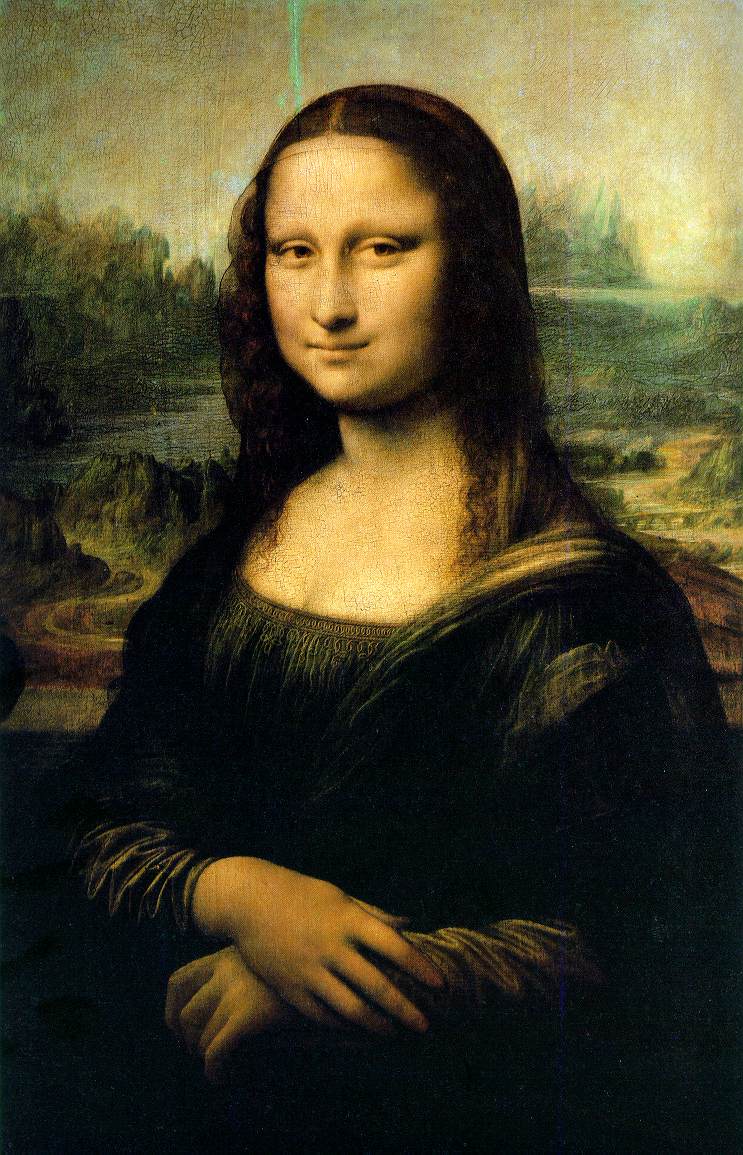
Well there are such paintings and statues even today, but they are few in number, compared with the tides of powerless, trivial, adjunct images that flood them over. Still, I invite you to name a few such. To get you started, here's one Totem
If the Reader/Book ship is an angst-filled, contested, unrequited affair--Plato's Dark and White Horses, yoked together but never quite in the same rhythm, or Plato's Lover and Beloved, never equal, never mutual--how much more difficult is the love affair of image and text.
* * * *
This just in:
Republican National Convention Schedule
New York, NY, 2004
6:00 PM Opening Prayer, led by the Rev. Jerry Falwell
6:30 PM Pledge of Allegiance
6:35 PM Burning of Bill of Rights (excluding 2nd amendment)
6:45 PM Salute to the Coalition of the Willing
6:46 PM Seminar #1: Getting your kid a military deferment
7:30 PM First Presidential Beer Bong
7:35 PM Serve Freedom Fries
7:40 PM EPA Address #1: Mercury, it's what's for dinner
8:00 PM Vote on which country to invade next
8:10 PM Call EMTs to revive Rush Limbaugh
8:15 PM John Ashcroft Lecture: The Homos are after your children
8:30 PM Roundtable discussion on reproductive rights (MEN only)
8:50 PM Seminar #2: Corporations: the government of the future
9:00 PM Condi Rice sings "I Can't Help Lovin' Dat Man"
9:05 PM Second Presidential Beer Bong
9:10 PM EPA Address #2 Trees: the real cause of forest fires
9:30 PM Break for secret meetings
10:00 PM Second prayer, led by Cal Thomas
10:15 PM Lecture by Carl Rove: Doublespeak made easy
10:30 PM Rumsfeld demonstration: How to squint and talk macho
10:35 PM Bush demonstration of trademark deer-in-headlights stare
10:40 PM John Ashcroft demonstrates new mandatory Kevlar chastity belt
10:45 PM Clarence Thomas reads list of black republicans
10:46 PM Third Presidential Beer Bong
10:50 PM Seminar #3: Education: a drain on our nation's economy
11:10 PM Hillary Clinton Pinata
11:20 PM Second John Ashcroft Lecture: Evolutionists: the dangerous new cult
11:30 PM Call EMTs to revive Rush Limbaugh again
11:35 PM Blame Clinton
11:40 PM Laura serves milk and cookies
11:50 PM Closing Prayer, led by Jesus Himself
12:00 AM Nomination of George W. Bush as Holy Supreme Planetary Overlord


![[identity profile]](https://www.dreamwidth.org/img/silk/identity/openid.png)
no subject
Date: 2004-08-04 03:51 pm (UTC)I am not convinced, though, that one has any more legitimacy than the other. After all, images are arresting. A single image can raise ire, motivate populations, blind us with clarity. On the other hand, words have a nasty habit of digging deep, clawing into one's brain and making their home among the nooks and crannies for a long, long time. Oops, wait a minute, images do that too, don't they? Perhaps images burn where words burnish but they both create a picture that the artist hopes will be indelibly marked on the viewer's/reader's mind.
no subject
Date: 2004-08-04 09:59 pm (UTC)On the visual theme: I'm not quite sure if this is what you meant-it's more along the visual/sound relationship rather than textual-but your post reminded me of watching DW Griffiths' Birth of a Nation, made in 1915. It's, obviously, a silent film, albeit with title cards. But the interesting thing when watching that movie, and really any other great silent movie (
On the visual theme: I'm not quite sure if this is what you meant-it's more along the visual/sound relationship rather than textual-but your post reminded me of watching DW Griffiths' <i>Birth of a Nation</i>, made in 1915. It's, obviously, a silent film, albeit with title cards. But the interesting thing when watching that movie, and really any other great silent movie (<i<Nosferatu</i>, etc) is to compare the visual styles of those films with films of today. Since they couldn't utilize sound, the look of the films is much...thicker, I guess, in the sense that they couldn't "cheat" and rely on spoken exposition so much; the shot had to tell the story. It's a great leap from the Hollywood fare of today, which assumes that the audience is too stupid to think for itself.
I do agree with the poster above, who said that both images and words can powerfully affect people in different ways; I guess it's just disappointing that so much of popular culture is designed around doing it cheaply.
*
<i>9:10 PM EPA Address #2 Trees: the real cause of forest fires</i>
*g*